
Obesity and Cancer: The Meaning of Patient Advocacy
November 2009
This is a CE-accredited article. The timeline for submitting the post-test for this article has expired.
ABSTRACT
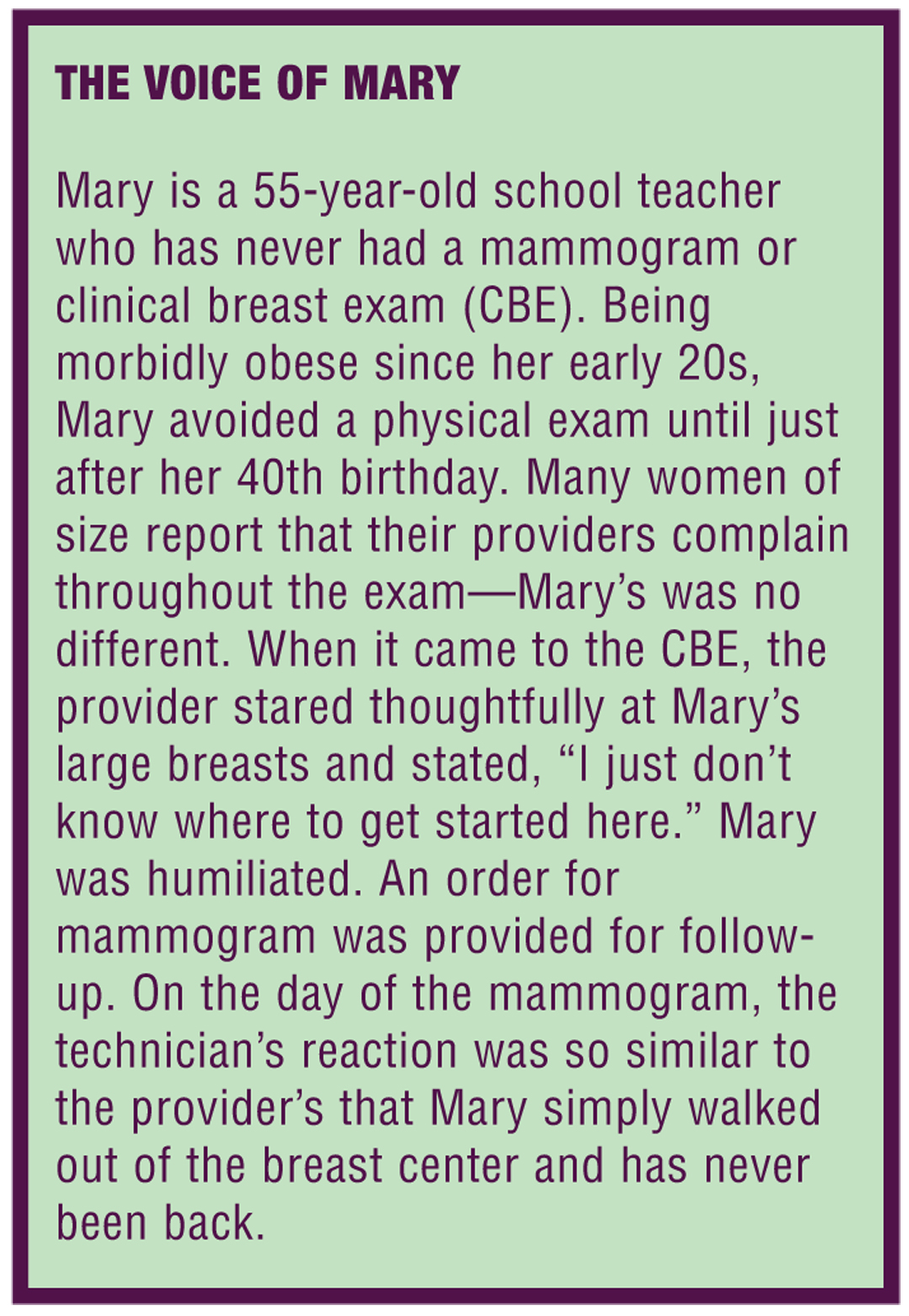
According to a recent analysis by the American Institute for Cancer Research, about 100,500 new cases of cancer are thought to be caused by obesity every year. This study which is the most comprehensive attempt ever to estimate the cancers attributed to extra weight poses implications for clinicians who advocate for patients of size. Statistics pertaining to weight and cancer prevalence, screening, diagnostic testing, and strategies for patient advocacy are discussed. Read the rest of this article »
Popularity: 1% [?]
Posted in Review | No Comments »
Complications Arising from Staple Lines and Anastomotes in Bariatric Surgery: Why They Happen and How to Avoid Them
November 2009
by Dugal Heath, MD, FRCS, FRACS
Bariatric Times. 2009;6(11):8–12.
INTRODUCTION
The invention of stapling devices, which can be used in laparoscopic surgical procedures, provides a number of benefits to surgeons. They are simple to use, provide a rapid means of dividing and joining bowel, and require less skill and experience on the part of the operator than that required for laparoscopic hand suturing. In spite of these benefits, their use is associated with a variety of problems, including leakage from staple lines or anastomoses, bleeding, and fistula formation,[1] which can, on occasion, prove fatal. This paper examines factors that are important in leading to these complications and suggests ways to avoid them. Read the rest of this article »
Popularity: 2% [?]
Posted in Review | No Comments »
Dr. Shikora has Left the Building… The Exit Interview of 2009 ASMBS President Scott Shikora, MD, FACS
November 2009
Bariatric Times. 2009;6(11):14–15.
The staff and Editorial Advisory Board of Bariatric Times interviewed Dr. Scott Shikora, exiting president of the American Society for Metabolic and Bariatric Surgery (ASMBS). Here’s what he has to say on his experiences and challenges as the ASMBS 2009 president and his thoughts on the future of bariatric surgery. Read the rest of this article »

Popularity: 4% [?]
Posted in Interview | 2 Comments »
Bariatric Surgery and Bariatric Medicine: A Developing Paradigm for Practice Modeling
November 2009
by Michael Kaplan, DO
Bariatric Times 2009;6(11):23–26
INTRODUCTION
With the popularity of bariatric surgery increasing every year,[1] there exists a real-world need among surgeons to have a medical specialty referral source to help manage their pre- and postsurgical patients over time. It does not make sense for a surgeon to spend his time dealing with nutritional issues and/or weight gain issues in postsurgical patients; the surgeon’s time is best spent doing surgery. For example, the cardiothoracic surgeon utilizes the expertise of the cardiologist to streamline patient care and improve patient outcomes. Likewise, shared management of the postsurgery bariatric patient between the bariatric surgeon and bariatric physician or bariatrician will also result in better long-term, weight loss outcomes for the patient.[2,3,4] This article provides the reader with a road map of the responsibilities the bariatrician can perform as part of a multidisciplinary team to assist the bariatric surgeon in improving the level of care the postsurgical bariatric patient receives. This type of enhanced relationship may allow the solo-practicing bariatric surgeon to offer the same level of care as the larger multidisciplinary university programs.[1] Read the rest of this article »
Popularity: 1% [?]
Posted in Review | No Comments »
Probiotics, Prebiotics, Gut Microbiota, and Obesity
November 2009
by Margaret Furtado, MS, RD, LDN
Bariatric Times. 2009;6(11):27–30.
INTRODUCTION
Probiotics are nonpathogenic live microorganisms that are believed to confer health benefits to the host when ingested. Researchers have suggested weight loss and/or antiobesity effects are among these benefits. Prebiotics are nondigestible oligosaccharides believed to act as “fertilizers” of colonic microbiota, enhancing growth of beneficial commensal organisms (e.g. Bifidobacterium, Lactobacillus). Prebiotics are believed to confer health benefits on the host, including modulation of lipid metabolism, and researchers have suggested potential antiobesity effects as well, possibly by modulating gut hormones, such as peptide YY (PYY) and glucagon-like peptide-1(GLP-1). The combination of prebiotics and probiotics, termed synbiotics, are believed to possess enhanced health benefits acting as a “functional food.” This article reviews the role of prebiotics and probiotics on obesity and discusses research that suggests that individuals with obesity may have differing amounts of particular microbiota (e.g. Firmicutes) and that gastric bypass surgery may alter gut microbiota in a favorable way. Read the rest of this article »
Popularity: 6% [?]
Posted in Review | 3 Comments »
Editorial Message: Where’s the IRB for SILS?
November 2009
Dear Collegues:
I just returned from the American College of Surgeons 95th Annual Clinical Congress in Chicago, and, as is always the case, I was impressed with the mathematical organization and size of the meeting. There were thousands of surgeons present, buses going back and forth, and the never-ending walk through the Moscone center.
The highlight of the meeting for me was the amount of marketing, driven mainly by members of industry and a group of surgeons, for single-incision laparoscopic surgery (SILS) or single-port surgery. I cannot hide my discontent at seeing the large amount of dollars and energy spent on what I believe is, at this point, a dangerous approach. Let me share with you my thoughts and reasons on why I say that. Read the rest of this article »
Popularity: 1% [?]
Posted in Editorial Message | No Comments »
In this “Age of Transparency,” Consulting to Industry Does Not Necessarily Equal Bias
November 2009
Dear Bariatric Times Editor:
Thank you for the opportunity to ask my question on financial transparency to exiting ASMBS President Dr. Scott Shikora in this month’s issue of Bariatric Times (Please see Dr. Shikora’s exit interview).
I asked Dr. Shikora the following question:
In this age of “transparency,” as we continue to grow exponentially, and profits from bariatric surgical support materials can be very lucrative, many are attracted to our field for other than altruistic reasons. Therefore, rather than ask the generic question about “disclosures,” do we have the right to ask to what degree and how much authors and researchers are actually paid by a commercial entity for their research and opinion about same? Read the rest of this article »
Popularity: unranked [?]
Posted in Letters to the Editor | No Comments »